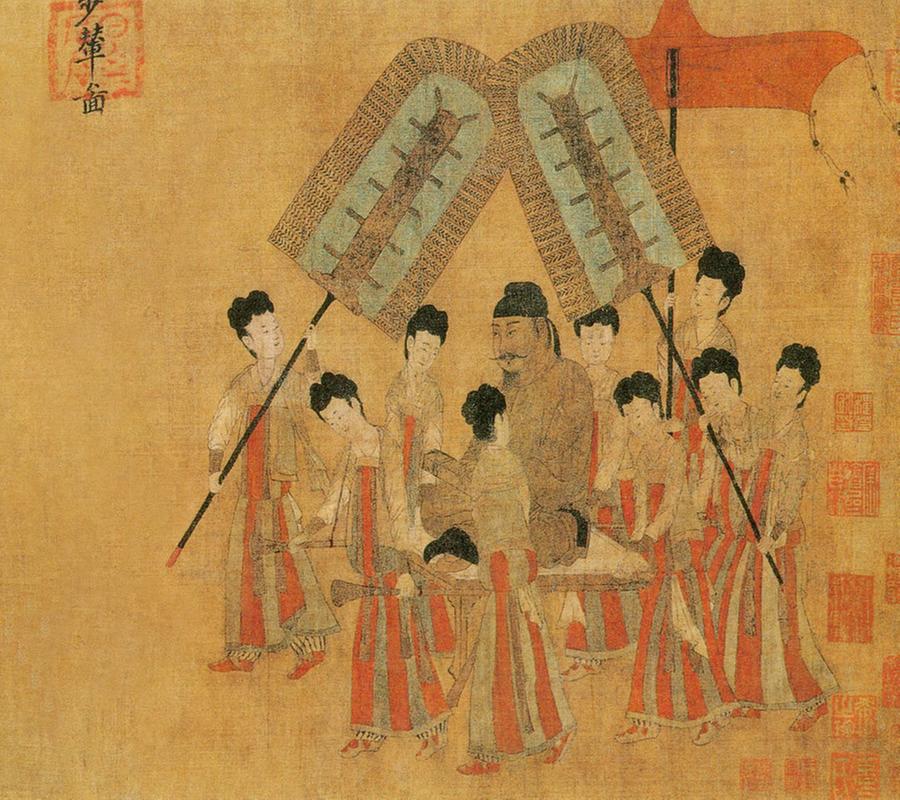
Yan Liben
Introduction
Yan Liben, a prominent figure in Chinese art history, was a distinguished painter and architect during the Tang Dynasty. Renowned for his exceptional contributions to art and architecture, Yan Liben won acclaim for his detailed historical paintings and architectural designs. His work reflects the rich cultural exchanges and political alliances of his era, especially evident in his famous scroll painting, Emperor Taizong Receiving the Tibetan Envoy, which documents the diplomatic relationship between the Tang Dynasty and Xizang. This masterpiece and many other contributions have earned Yan Liben a lasting legacy in both artistic and cultural history.
Early Life
Yan's father, Yan Pi, was also a painter, and it is likely that Yan Liben received early training in art under his father's guidance. Growing up during the Tang Dynasty, a period marked by cultural flourishing and openness to foreign influences, Yan Liben was exposed to diverse artistic styles and techniques, which played a significant role in shaping his own artistic approach. Despite the limited information on his early life, it is evident that Yan Liben developed his artistic talents from a young age and was well-versed in the aesthetics and artistic traditions of his time.
Career
Yan Liben's career as an artist and official was marked by his service to the Tang court. He held several prominent positions, including the role of a court painter. His works were commissioned to decorate the imperial palace and document significant historical events. Yan Liben's artistic style was characterized by meticulous attention to detail, expressive figures, and a deep understanding of the historical context he depicted. His paintings often conveyed complex narratives, capturing both the grandeur of the Tang court and the intricacies of diplomatic relations. Apart from painting, Yan Liben was also involved in architectural projects, although detailed records of these works are scarce.
Contributions to Art
Yan Liben is best known for his contributions to historical painting, a genre that flourished during the Tang Dynasty. His works, such as Emperor Taizong Receiving the Tibetan Envoy, are celebrated for their narrative depth and historical accuracy. Through his paintings, Yan Liben not only documented historical events but also provided insights into the cultural exchanges and political landscapes of his time. His ability to blend traditional Chinese painting techniques with storytelling has left a lasting impact on the art world.
Architectural Works
In addition to his achievements in painting, Yan Liben made significant contributions to architecture. Although specific details of his architectural works are less documented, it is known that he was involved in the design and construction of several structures during the Tang Dynasty. His architectural designs were likely influenced by the same principles that guided his paintings—attention to detail, harmony, and a reflection of the cultural ethos of his time. Yan Liben's involvement in both art and architecture highlights his versatility and the breadth of his contributions to the cultural fabric of the Tang Dynasty.
Notable Works
Among Yan Liben's notable works, Emperor Taizong Receiving the Tibetan Envoy stands out as a masterpiece of historical painting. This 1.3-meter-long silk scroll captures the diplomatic meeting between Emperor Taizong and the Tibetan envoy Gar Tongtsen Yulsung. The painting not only reflects Yan Liben's skill in depicting figures and expressions but also serves as a historical document of the relationship between the Tang Dynasty and Xizang. The piece is part of the collection at the Palace Museum in Beijing and has been exhibited in various exhibitions highlighting its significance in Chinese art history. Other works by Yan Liben include The Thirteen Emperors Scroll, which portrays various emperors of China and demonstrates his expertise in capturing the essence of historical figures.
Influence and Legacy
Yan Liben's influence extends beyond his lifetime, leaving a profound impact on Chinese art and cultural history. His paintings are celebrated for their historical significance and artistic excellence, inspiring generations of artists who followed. Yan Liben's work played a crucial role in documenting the political and cultural exchanges of the Tang Dynasty, providing valuable insights into this vibrant period of Chinese history. His legacy is preserved not only through his surviving artworks but also through the continued appreciation and study of his contributions to the arts. Yan Liben remains a revered figure in the history of Chinese painting, celebrated for his ability to capture the spirit of his time with unmatched skill and artistry.
Personal Life
Details about Yan Liben's personal life are scarce, and much of what is known about him comes from historical records and the legacy of his work. It is known that he was born into an artistic family, which likely influenced his career path and artistic development. Yan Liben's life was largely intertwined with his service to the Tang court, where he held various positions and produced some of his most famous works. Despite the limited personal details, Yan Liben's dedication to his craft and his contributions to the cultural and artistic heritage of China are evident in the body of work he left behind.








